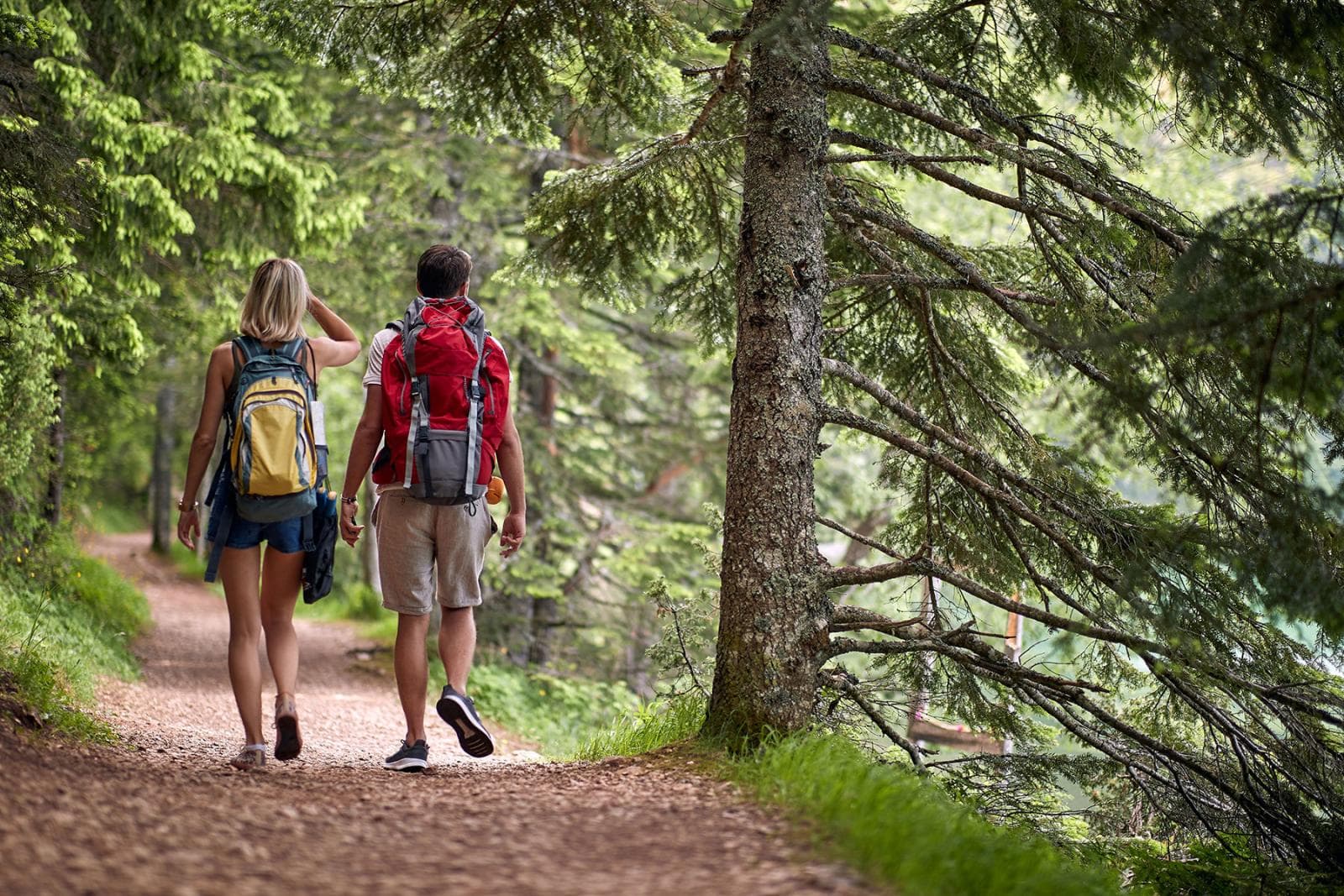
Hiking Preparation
Everything you need for a safe and enjoyable experience on the trails of the Peloponnese
The trails of the Peloponnese offer exceptional outdoor experiences, from forest routes and gorges to mountain crossings, traditional villages, and historic landmarks. To enjoy them safely, proper preparation before every hike is just as important as the trail itself.
Route Selection
Before choosing a trail, hikers should honestly assess their fitness, experience, and available time. The right route is one that matches the abilities of the person or group, not only in distance, but also in difficulty, elevation gain, and terrain type.
Route Study
It is equally important to study the route in advance. Hikers should know the approximate duration, water availability, entry and exit points, alternative options, and likely challenges such as rocky ground, exposed passages, ravines, or stretches with little shade.
Weather & Security
Weather is one of the most important mountain safety factors. Before every hike, the forecast should be checked for the exact area rather than only the nearest town, because mountain conditions can change quickly and may differ significantly from lower elevations. In case of rain, strong wind, storms, extreme heat, or snow, the hike should be reconsidered or postponed.
Equipment
Proper equipment makes a major difference. A reliable pair of hiking shoes with good grip, season-appropriate clothing, a windproof or waterproof layer, a hat, sun protection, and a light but well-organized backpack are the basic foundation for a safe hike. On more demanding trails, trekking poles, a spare layer, and a small first-aid kit are also very useful.
Hydration & Nutrition
Hydration and food should never be underestimated. Hikers should carry enough water according to distance, difficulty, and temperature, as well as light, energy-rich food such as nuts, dried fruit, bars, or a small snack. Good hydration should begin before the walk and continue regularly during it.
Navigation
Navigation is also essential. Even on marked trails, it is wise to carry a map, GPS device, or an offline navigation app, along with a simple return or alternative plan. Hikers should never rely only on a phone battery or on the assumption that “the trail looks obvious.”
Third Party Notification
One of the most important safety rules is to make sure someone else knows your plan. Before every hike, a family member or friend should know the route, the starting point, the expected return time, and how many people are in the group. This simple habit can be crucial in the event of delay or emergency.
Rhythm & Attention
During the hike, a steady pace, energy management, and constant awareness are essential. Do not push the body to its limit, do not continue if you feel unsafe or exhausted, and never underestimate a difficult passage. Hiking should remain an experience of enjoyment and connection with nature, not a test of endurance at any cost.
Respect for Nature
Finally, good trail behavior is part of proper preparation. Respect nature, animals, cultivated land, small chapels, stone fountains, and the villages you pass through. Leave no litter, avoid unnecessary noise, and stay on the marked route. In this way, the landscape is protected and the experience remains welcoming for future visitors as well.
Before You Begin
- Before setting out on any trail in the Peloponnese, take time to prepare properly: choose a route that matches your fitness and experience, study its distance, difficulty, elevation, and terrain, and always check the weather forecast for the specific area.
- Carry proper hiking shoes, water, light food, a map or GPS, a basic first-aid kit, and clothing suited to the conditions.
- Tell someone where you are going, start early, and always follow the waymarking with respect for nature and the landscape.

Footwear & clothing
In a light backpack, take only the essentials.
- Hiking boots (not trainers) with ankle support, good grip and waterproofing.
- Hiking socks, plus a spare pair to prevent blisters.
- Long trousers are strongly recommended; low thorny vegetation can scratch or cause skin reactions.
- A light windproof/waterproof jacket, and a fleece or mid layer depending on the season.
- Sun hat, sunglasses, and sunscreen, plus gloves/hat in cold conditions.

Backpack and supplies
- Water: at least 1–1.5 L for easy stages, up to 2–3 L for longer or hotter days.
- Snacks: cereal or nut bars, dried fruit, a piece of fruit or a small sandwich.
- Fully charged phone with GPS app and offline map if possible.
- Trekking poles, very useful on steep ascents/descents and rocky or loose ground.

Basic first aid
The official kit includes: elastic bandage, hemostatic gauze/compress, wound closure strips, band aids, sterile gauze, gloves, an insect bite stick and a couple of basic painkillers.

On trail behavior and wildlife
- Sections run through woods, ravines, riverbanks and farmland; stay on the marked trail and avoid disturbing livestock or dogs guarding flocks.
- You may meet mules, farm dogs or other animals: mules always have right of way; step aside and never approach them from behind.
- Follow Leave No Trace principles: no litter, minimal noise, no damage to plants or structures; pack out all trash.

Stages, villages and logistics
- Expect 4–6 hours of walking on many stages, sometimes more for harder sections; families often prefer the shorter/easier legs or splitting a long stage into two days.
- The trail is a village to village trek: most stages start and end in villages with food and lodging, but you should book accommodation ahead, especially outside peak season.
- Many small villages are still cash based economies; carry enough paper money for food, lodging and transfers.

Seasons and conditions
- The classic season is spring and autumn; these offer mild temperatures and lush vegetation.
- Summer stages inside forests can be pleasant but avoid hiking during heatwaves.
- In winter (December–March) there may be rain or snow, and some sections become much more serious or unsuitable for families.
Ready to Get Started?
Now that you are prepared, choose your path and begin the adventure!
Explore the Trails